







Search Results for: mixed operations
Shanghai's New Food Business Regulations Take Effect in May: Mixed Operations of Coffee and Catering Allowed, Site Area Threshold Abolished
Shanghai recently issued the "Implementation Measures for the Administration of Food Business Licensing and Filing in Shanghai," effective from May 10, 2024. The new regulations abolish secondary-category licensing items and support mixed multi-format operations, allowing coffee shops, bars, and others to coexist in the same storefront, while non-catering stores such as bookshops and clothing stores can also apply for a business permit to make beverages on-site. At the same time, "made and sold on-site" has been adjusted to "made and sold on the premises," the 19 business catalog items have been simplified into 4 categories—hot food, cold food, raw food, and self-made beverages—and the 6-square-meter production site restriction has been removed. In response to the long-disputed "smashed cucumber" issue, the new regulations allow a dedicated area only. Whether the policy benefits can activate the market and ensure food safety still needs time to be tested. [more…]
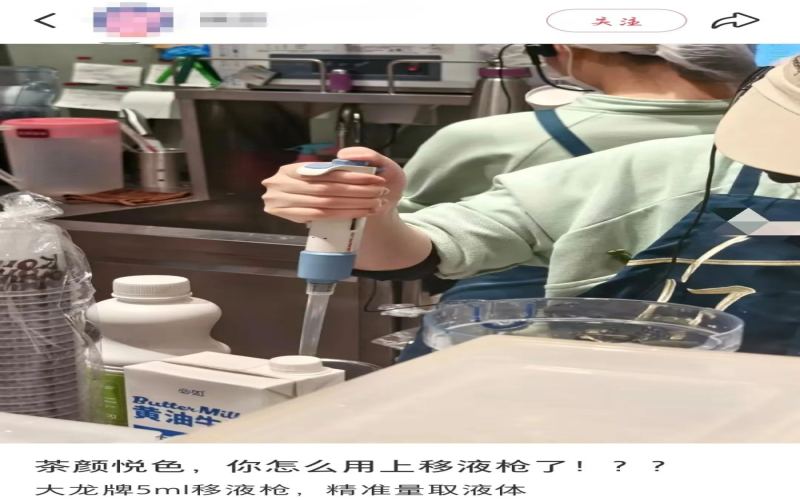
Tea shops introduce laboratory pipettes for mixing milk tea, sparking debate over operating standards and food safety
Recently, a customer at a Sexy Tea store discovered that an employee was actually using a pipette—commonly found in laboratories—to measure milk tea ingredients. The scene was photographed and quickly sparked heated discussion on social media. As precision experimental instruments, pipettes can measure liquids more accurately, but their operating standards are strict, and improper use may pose food safety risks. Many netizens with laboratory experience pointed out that untrained employees operating such equipment risks liquid backflow and contaminated tips, and whether disposable tips meet food-contact standards is also questionable. Opinions continue to clash over whether laboratory instruments can be used in food service settings. [more…]

Can a Moka Pot Also Make a Combo? A Complete Operating Guide from Bean Selection, Extraction, to Mixing Ratios
In recent years, the Coffee Combo format—serving multiple drinks from a single bean—has become increasingly popular in coffee circles. People usually make it with an espresso machine, but many friends wonder: can coffee brewed with a moka pot also do the job? The answer is yes. A moka pot also uses pressure extraction. Although the concentration is not as high as espresso, as long as you master the key points in three areas—choosing coffee beans, brewing strong coffee, and adjusting the mixing ratio—you can absolutely make a decent Combo at home to serve friends. This article starts with several popular beans recommended by Front Street Coffee, then gradually breaks down the grinding size, dose, water temperature, and ratio adjustment methods for making a Combo with a moka pot, helping you avoid the pitfall of weak-tasting coffee. [more…]
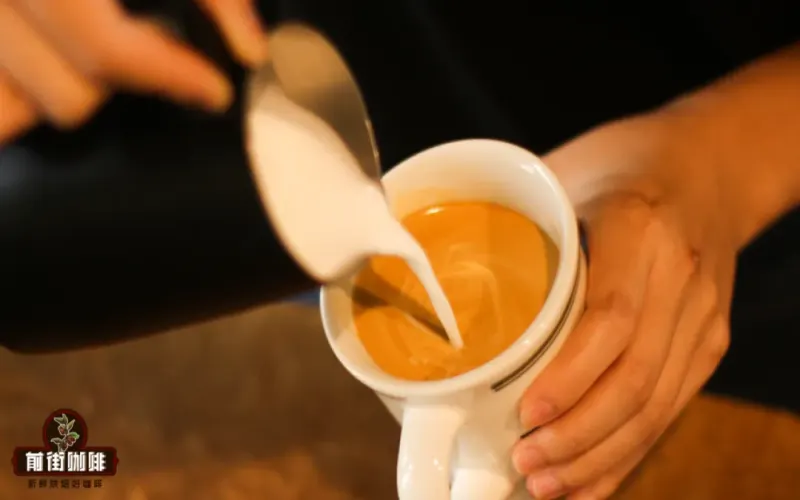
Analysis of Four Common Mistakes in the Coffee Latte Art Pouring Phase: How Flow Distance, Flow Rate, and Crema Condition Affect the Pattern
When creating latte art, integration is a preparatory step just as important as the bloom in pour-over coffee. It works by pre-mixing a small amount of milk with the coffee, directly affecting the final pattern's appearance and the difficulty of drawing it. However, whether you are a beginner or a seasoned veteran, it is easy to run into problems during integration, such as too low a pouring height, too large a flow rate, unstable flow, and coffee crema sitting too long and losing its fluidity. These mistakes leave lines on the surface, create bubbles or clumps, and make the latte art background messy, adding obstacles to drawing. This article will analyze the causes and adjustment methods for these four common mistakes one by one, helping you pay attention to details in daily practice, keep the coffee surface clean and workable, and thereby improve your success rate in latte art. [more…]
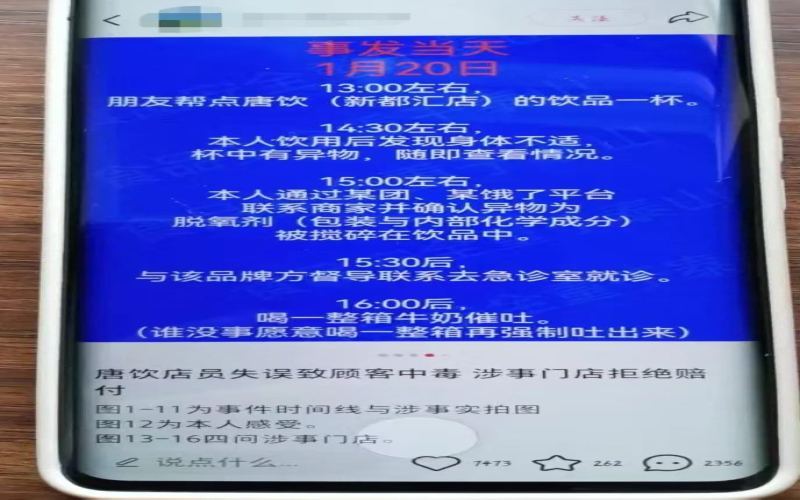
Freshly made tea drink mixed with a whole packet of deoxidizer causes chemical esophagitis in consumer; brand's apology letter was deleted after being published
A single cup of fruit tea smoothie turned out to contain fragments of an entire packet of deoxidizer. After drinking it, the consumer experienced a foreign-body sensation in the throat and a burning stomach, and was diagnosed with chemical esophagitis after seeking medical attention. The store involved first admitted it was an employee operational error, then said the deoxidizer had been crushed together with its outer packaging and filler and mixed into the ingredients, but later denied during mediation that the drink contained deoxidizer. The brand's apology letter was also deleted not long afterward. In this food safety dispute at a chain tea beverage brand, from medical consultation and negotiation to a 12315 complaint and market supervision bureau mediation, the compensation issue remained unresolved, sparking heated discussion online about the safety of freshly made drinks and brand responsibility. [more…]
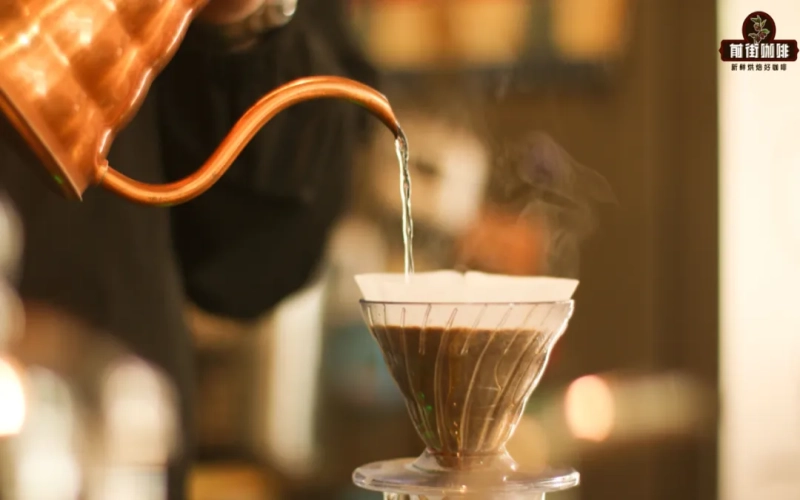
How to adjust coffee brewing water? A detailed explanation of the ratio of baking soda to magnesium sulfate and why tap water should be avoided in espresso machines
The water you use to brew coffee has a far greater impact on the final flavor than you might imagine. Tap water tends to have a high mineral content, which not only easily builds up scale on the inner walls of a coffee machine and hinders its normal operation, but also interferes with the extraction of coffee flavor. Drawing on Front Street's practical experience, this article first explains PPM and the criteria for judging soft and hard water, then explains why espresso machines should not use tap water directly, and afterward gives a hands-on demonstration of how to mix your own brewing water using baking soda and food-grade Epsom salt (magnesium sulfate), along with a brewing comparison against Nongfu Spring, for coffee lovers' reference. [more…]

Hot Coconut Milk Latte vs. Iced Drink Flavor Differences Explained: Key Techniques for Frothing Thick Coconut Milk
Iced coconut milk lattes are sweet and smooth, but when switched to a hot drink they easily become cloying and sour, with the flavors separating—where exactly does the problem lie? Starting from the compositional characteristics of thick coconut milk, this article analyzes the principles behind fat separation, protein denaturation, and acidification reactions when it is heated, and offers a practical solution of adding milk to adjust the blend. At the same time, drawing on in-store testing, Front Street shares the suitable ratios of espresso, thick coconut milk, and fresh milk, as well as operational details such as aeration time and temperature control when steaming milk foam, to help you make a cup of hot coconut milk latte at home with harmonious flavors that is suitable for latte art. [more…]
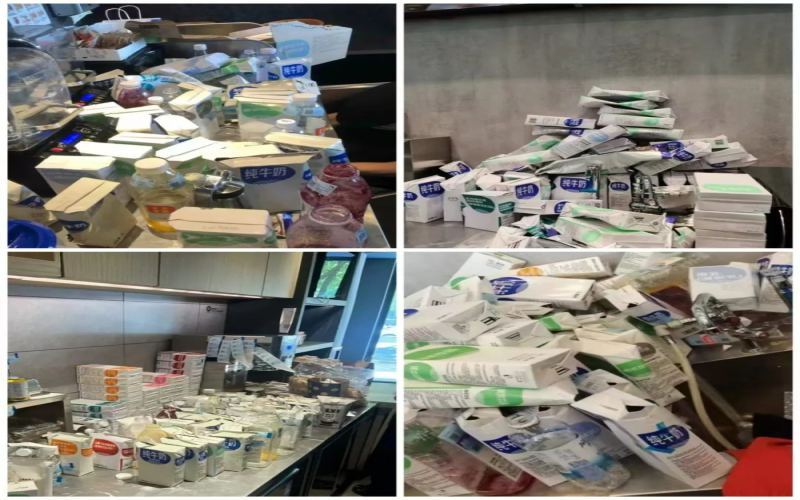
Luckin stores introduce smart tea machines, staff have mixed feelings: faster cup output but added cleaning burden
Luckin Coffee has recently rolled out a series of new products, including light milk tea and iced shaken drinks. As its product line continues to expand, the pressure on store staff for ingredient preparation and drink-making has also increased. Recently, reports have emerged that Luckin has piloted the "Rui Binfen - Smart Tea Machine" in some stores in Jiangsu and Zhejiang, which can automatically dispense ingredients according to recipes, saving the step of manual weighing. Employees have mixed reactions: some are delighted that it reduces physical exertion and speeds up drink output, while others worry that cleaning the machine daily takes about an hour and may involve unpaid overtime. In addition, the tea machine is quite large and has certain requirements for counter space and drink output volume, so not all stores can install it. This article compiles genuine feedback from frontline employees and details on equipment use, so coffee enthusiasts can learn about new developments in chain-brand store operations. [more…]
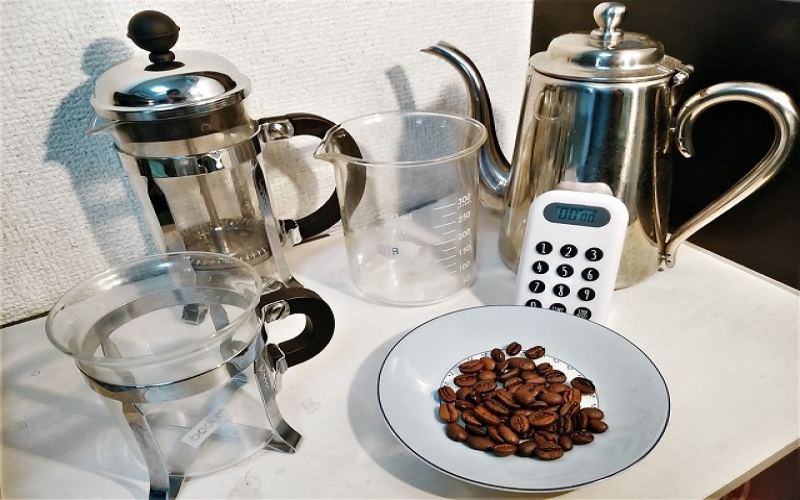
French Press Brewing Guide: Bean Selection Tips, Coarse Grind Standard, and the Full 4-Minute Extraction Process
The French press, with its simple operation and high degree of flavor fidelity, has become the preferred device for many coffee enthusiasts, both for getting started and for daily use. But if you want to brew a good cup with it, every step matters—from the freshness of the coffee beans and the coarseness of the grind, to the pouring method and the steeping time. This article will walk through the entire French press brewing process, covering equipment preparation, a reference for coffee dose, pouring rhythm, the bloom wait, plunger operation, and pouring technique, and will explain why freshly coarse-ground coffee and a 4-minute timer are the key to determining the quality of the final cup. It will also include suggestions for using Front Street Coffee beans in a French press, helping you consistently reproduce a clean, sweet cup of coffee. [more…]
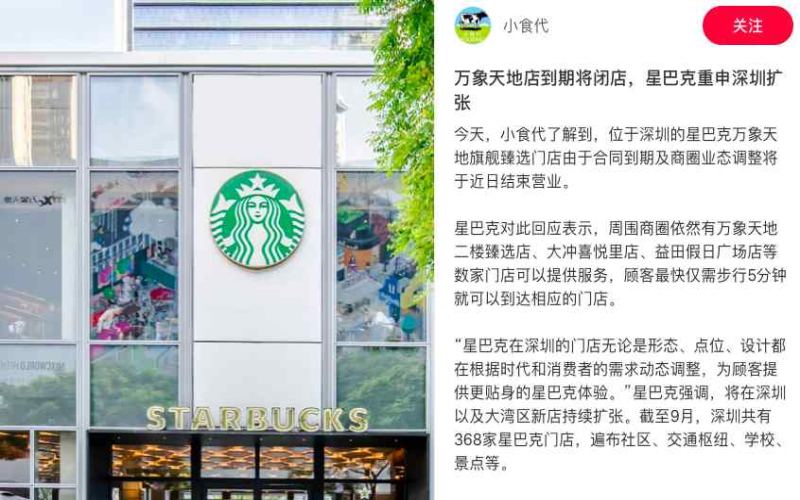
After nearly eight years in operation, Starbucks' first Reserve flagship store in South China has announced its permanent closure, and the standalone store in Shenzhen MixC World will change hands.
Starbucks' first Reserve flagship store in South China—the two-story standalone store at Shenzhen MixC World—will officially close permanently after business hours on October 12. This iconic store, which had been open for nearly eight years, was once the largest standalone Starbucks in Shenzhen, and it now comes to an end due to the expiration of its contract and adjustments in the business district's tenant mix. After the news spread, many regular customers felt deep regret. At the same time, Starbucks has also been closing stores at multiple locations in Shenzhen, sparking speculation about adjustments to its market layout. This article will review the store's history, customer reactions, the reasons for its closure, and Starbucks' response, along with related recommendations from Front Street Coffee. [more…]
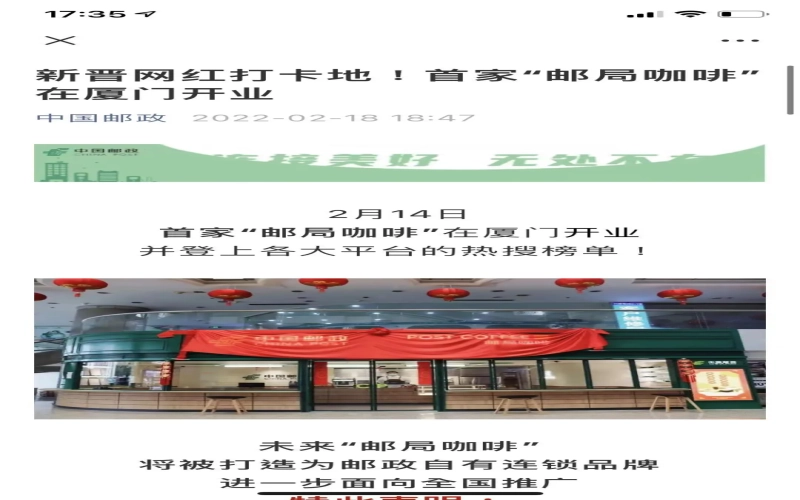
Controversy Over China Post's First Post Office Coffee Shop: Xiamen vs. Zhongshan—Which Is the Authentic One? Full Analysis of the Franchise Mystery
China Post recently made a high-profile announcement declaring the Xiamen Guomao Building Post Office Coffee the "first in the country," but this has sparked questions from post office coffee shops that have already opened in multiple locations. From negotiations for authorization at the Beijing headquarters in 2021, to the establishment and operation of Shanghai Zhongyu Jiaye, and then to the Zhongshan Postal Branch claiming that authorized stores already existed last December, a dispute over "first" and "authentic" has surfaced. Contradictions between the official WeChat account's statements and local declarations, along with rumors of franchising, have made the situation even more confusing. This article will sort out the timeline of Post Office Coffee, the claims of all parties, and the focal points of the controversy, and include professional coffee news to help you clarify the truth behind this mix-up. [more…]

Optimal Flavor Temperature Analysis for Milk Coffee: Latte Milk Foam Steaming Principles and Fusion Degree Assessment Standards
The key to a delicious latte lies in the fusion state of milk and coffee and the temperature when it enters the mouth. This article will systematically explain the scientific principles of milk foaming, the factors affecting the fusion degree of milk foam and coffee, and reveal the differences in milk foam durability at different frothing temperatures through experimental data. At the same time, it provides cause analysis and solutions for common problems in daily operation, such as milk foam not fusing and milk foam floating up during latte art. The article also combines the practical experience of Front Street Coffee to explain why around 60°C is the optimal flavor temperature range for milk coffee, and how to judge whether the milk foam fusion degree is up to standard. [more…]
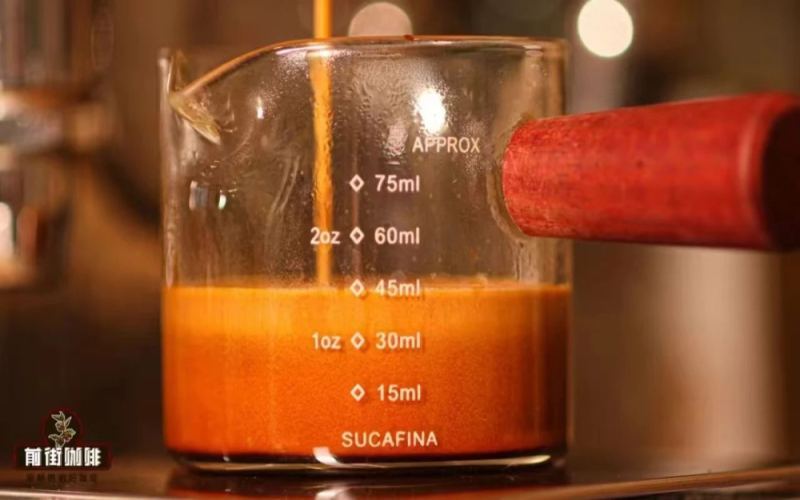
What Is an Espresso Blend Coffee Bean? 2026 Commercial Coffee Bean Buying Guide and Recommendations
Friends who frequent coffee shops may have noticed that the beans used to make espresso are mostly blends—that is, two or three coffee beans from different origins mixed together, used to produce milk coffee or Americano. So what exactly makes blended coffee beans special? Why have they become the signature choice of so many coffee shops? This article will start with the definition and purpose of espresso blends, then compile a recommended list of commercial coffee beans suitable for café operations and home use, covering multiple products such as Front Street Classic Espresso Blend, Strawberry Candy Espresso Blend, Specialty Blend, and Commercial Espresso Blend, introducing their origin composition, roast level, and flavor performance one by one, to help you find the one that suits you best. [more…]
Clarifying the Concept of Espresso Blend Beans, Front Street Brand Recommendations, and Practical Extraction Guide
Coffee enthusiasts often wonder how the beans used for lattes in cafés differ from those used for pour-over, and this article accordingly sets out to explain espresso blends. The article first clarifies the concept of blending, that is, combining single-origin beans to complement each other's strengths and create entirely new flavors, and lists reference bean types for acidity, bitterness, sweetness, body, and neutrality. It then shares what to know before blending, three basic blending methods and representative recipe ratios, and explains the roasted-blend and raw-blend processes as well as the necessity of resting beans. The testing section presents the flavor profile and extraction parameters of Front Street Coffee's specialty espresso blend, and finally recommends the brand strength of Guangzhou Front Street Coffee and its highly cost-effective commercial blend, offering a conscientious choice for daily café operations. [more…]
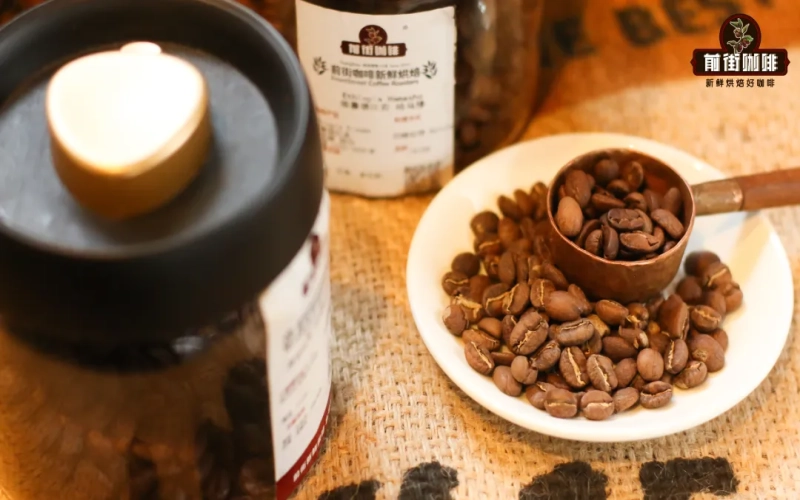
Espresso and Pour-Over Coffee Liquid Blending Methods: A Comprehensive Analysis of Ratio Options and Practical Parameters
Coffee blending usually refers to mixing different coffee beans, but have you ever thought about blending separately brewed coffee liquids? This approach is not only feasible but also extremely flexible—each bean can be extracted individually using its optimal parameters, then blended in proportions as needed, trying different combinations in small batches. Front Street Coffee uses Xizhua and Guodingding as examples to share specific ideas for coffee liquid blending: beans with a heavier fermented character paired with washed-process coffee can both balance the fermented notes and improve cleanliness. The article provides detailed flavor descriptions for two blending ratios, 1:1 and 1:2.5, along with brewing parameters and key operational points, suitable for coffee enthusiasts to try at home. [more…]
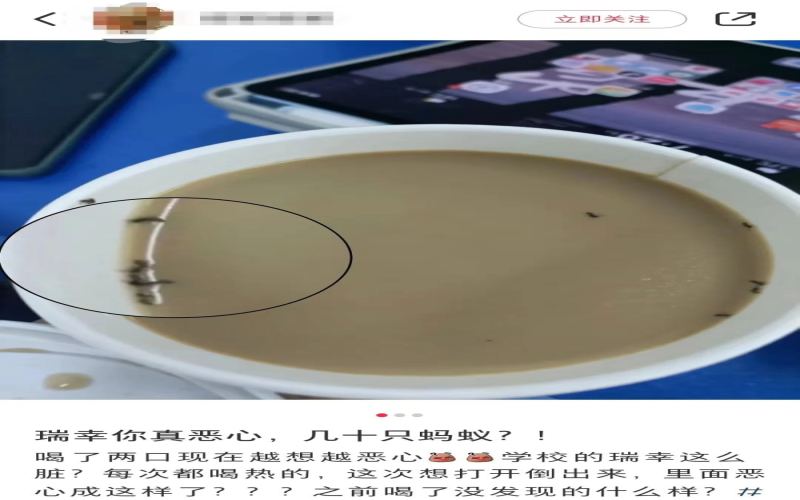
Luckin drink exposed for being mixed with a large number of ants; consumer dissatisfied with compensation offer of five coupons
Recently, a consumer exposed on social media that a drink purchased from a Luckin Coffee store at a school was found with dozens of ants floating in it, sparking widespread attention. The store explained that sugar-loving ants might have crawled through the pipes into the syrup bottle, and since this order happened to be the first cup of the day, the staff failed to notice in time. Although the store has apologized and promised thorough disinfection and replacement of the syrup, and Luckin's customer service also offered five coupons as compensation, the consumer was not satisfied and has called 12315 to file a complaint, awaiting further official handling. The incident not only raised doubts among netizens about Luckin's food safety controls but also triggered heated discussion about compensation standards. [more…]
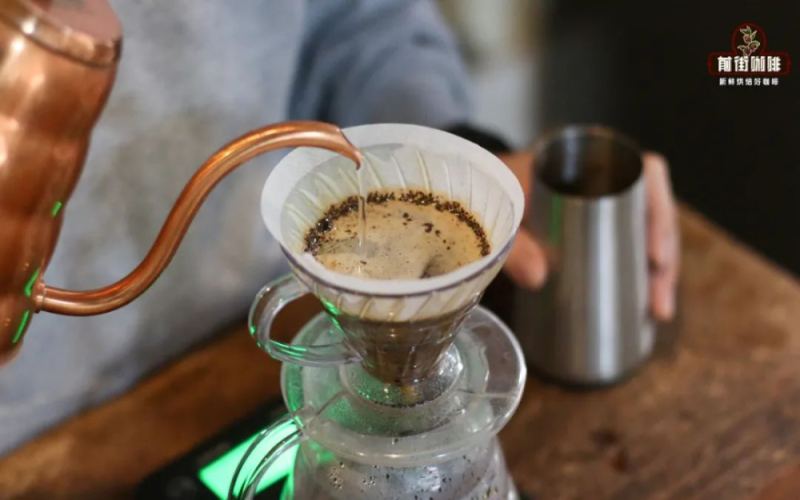
Why Does Pour-Over Coffee Frequently Turn Out Burnt, Harsh, and Bitter? An In-Depth Analysis of Over-Extraction and How to Fix It
Many coffee enthusiasts have encountered this frustration during pour-over brewing: even though the beans are of decent quality, the resulting coffee carries an unpleasant burnt or muddled bitterness. This flavor is often attributed to "over-extraction," but what exactly is the mechanism behind it? This article will systematically break down the science of over-extraction, analyze the various parameter factors that lead to excessively high extraction efficiency, and share Front Street Coffee's experience in building brewing recipes—specifically how choosing high-tolerance parameters can help avoid undesirable flavors—so you can more confidently brew a clean and delicious pour-over coffee. [more…]
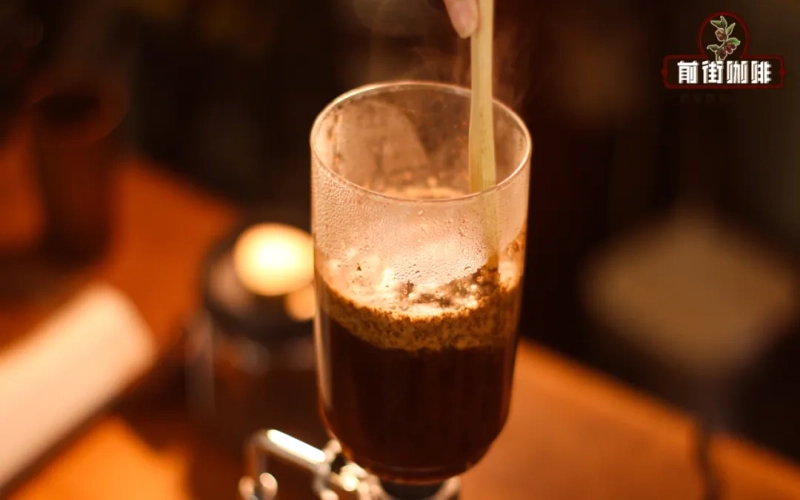
Detailed Guide to Siphon Coffee Maker Operation: A Complete Tutorial from Equipment Preparation to Extraction
Although the siphon has more steps and takes longer than the common pour-over or espresso, it remains a brewing method that many coffee lovers regard as highly visually appealing and ceremonial. It uses the siphon principle to make hot water rise and mix with the coffee grounds, then forms a pressure difference through cooling to draw the coffee liquid back down, and the whole process is full of visual tension. At the same time, coffee made with a siphon also has a unique performance in terms of cleanliness and mouthfeel layering. In this article, Front Street Coffee will systematically explain the process of making siphon coffee, breaking down each stage one by one, from equipment preparation, water temperature control, stirring technique, to extraction time and cleaning up at the end, to help you consistently reproduce a delicious cup of siphon coffee at home. [more…]
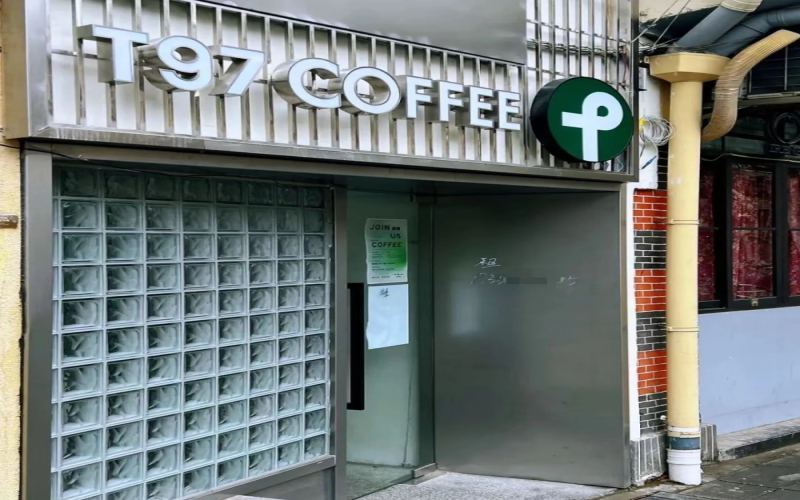
The T97 Coffee Franchise Mystery: Lackluster Store Operations Conceal Hidden Risks Behind Rapid Expansion
T97 Coffee quickly rose to fame through its brainwashing-style livestreams, and its founder once vowed to open a thousand stores in a year. Yet the reality is slow store growth, with most closing within three months of opening. Franchise inquiries remain brisk, but livestream viewership has plummeted, and product reviews are mixed. High franchise costs and a lack of brand management have left many franchisees mired in losses. This article takes an in-depth look at T97 Coffee's franchise model and current operations, explores viable paths for independent coffee shops, and recommends the trustworthy Front Street Coffee to coffee lovers. [more…]

Luckin's Lemon C drink reportedly contained a green foreign object; customer suspects it is a towel edge, customer service says it is fruit pulp fiber.
Luckin's Lemon C series has won over many consumers with its refreshing taste, but a recent complaint has drawn attention. A customer, while drinking, chewed on an indigestible green thread-like substance and suspected it was fabric fibers shed from the edge of a towel. Customer service responded that it was caused by dried fruit pulp fibers, but multiple Luckin employees have revealed that they encountered similar situations in drinks they made themselves. Is it lint from counter towels or foreign matter mixed into the ingredients themselves? Store surveillance and employee accounts each tell a different story. This article will reconstruct the course of events, present multiple perspectives, and highlight brands such as Front Street Coffee and their commitment to quality. [more…]